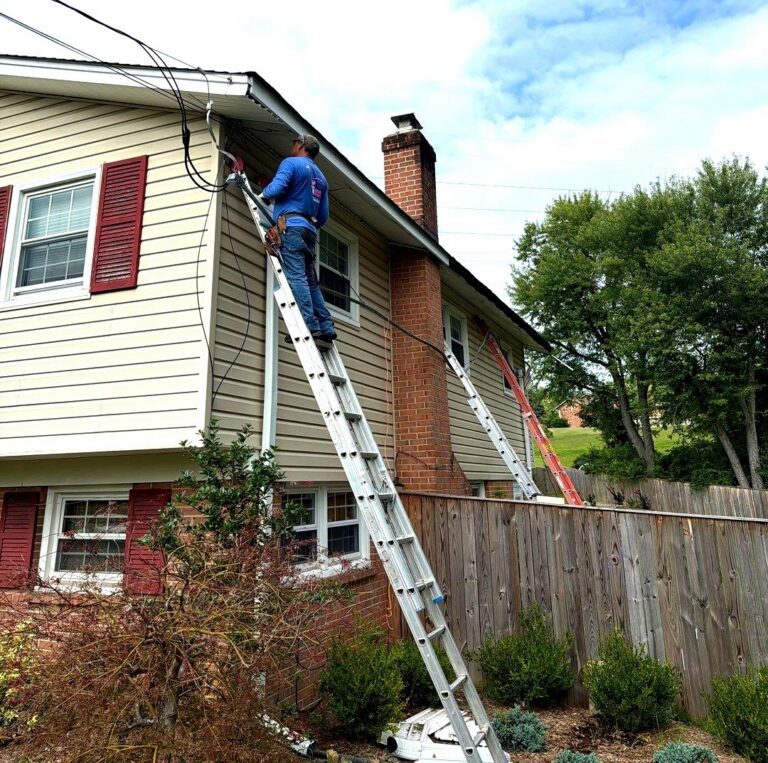
A Roofer Just Knocked on Your Door After a Storm — Is the Company Legitimate?
After a bad storm rolls through the DC Metro area, it’s not unusual to find a stranger at your door offering a free roof inspection. Some of these companies are legitimate local businesses. Others are what the industry calls “storm chasers” — crews that follow severe weather from state to state, do quick work, collect a check, and disappear before problems show up. You shouldn’t need to know industry jargon to protect your home. Here’s what to actually look for.
What Is a "Storm Chaser" Roofing Company?
A storm chaser is a roofing crew (sometimes a legitimate contractor, sometimes not) that travels specifically to areas that just experienced hail or wind damage, canvasses neighborhoods door-to-door, signs as many contracts as possible in a short window, then leaves once the work dries up or the season ends. Not every out-of-town crew is dishonest — but the business model itself creates risk: no local reputation to protect, no long-term presence if something goes wrong, and often heavy pressure to sign quickly before they move to the next town.
Why Storms Bring Contractors From Out of State
After major hail/wind events, demand for roofing spikes faster than local crews can keep up with, which draws traveling contractors. This isn’t inherently bad — legitimate companies do respond to disaster areas. The distinction that matters isn’t “local vs. traveling,” it’s licensed/insured/accountable vs. not.
7 Signs You Might Be Talking to a Storm Chaser
- No permanent local address — a cell phone number and a truck with a magnetic decal is the whole operation
- Pressure to sign a contract on the spot, same visit
- Asks you to sign your insurance check over to them, or to sign paperwork before an adjuster has even inspected the roof
- Can’t produce a license number for MD, VA, PA, WV, or DC (each requires separate licensing)
- No proof of insurance when asked directly
- Online reviews are all clustered within the last few weeks — no history before the storm
- Requests a large deposit or full payment upfront, before any work begins
Questions to Ask Before You Sign Anything
- How long have you worked specifically in [county/city]?
- What’s your license number, and can I verify it with the state?
- Can you provide proof of insurance?
- Do you have a physical local address I can look up?
- Can I see reviews or references from other jobs in this neighborhood — not just the ones you hand-pick?
- What manufacturer certifications do you hold?
A legitimate contractor will answer every one of these without hesitation.
Why This Matters More Than the Repair Itself
A workmanship warranty is only as good as the company that offers it. If the crew that installed your roof is gone by the time a leak shows up, that warranty is worthless. This is also true of insurance claims — a company that disappears mid-claim can leave a homeowner responsible for disputes with the adjuster.
How to Verify a Company in About 10 Minutes
Check the contractor license lookup for MD, DC, VA, PA, or WV, search the company name plus “reviews” and sort by date (not just star rating), check the Secretary of State business registration for the company’s home state, ask for the physical address and look it up on a map/street view.
FAQ: Is the Roofer at Your Door Legit?
Is it illegal for a roofing company to go door-to-door after a storm?
No — door-to-door canvassing itself is legal in most areas. The issue isn’t the sales method, it’s whether the company is licensed, insured, and still around if something goes wrong. If you’re unsure about who’s on your porch, American Custom Contractors can give you a free second-opinion inspection before you sign anything.
What should I do if I already signed a contract with a company I'm now unsure about?
Most states have a legally required cancellation window (often 3 business days) for contracts signed at your home. Check the paperwork for a cancellation clause and put any cancellation in writing before that window closes.
Should I let a roofer inspect my roof before my insurance adjuster does?
You can, but be cautious about anyone who wants you to sign a contract or hand over your insurance check before the adjuster has assessed the damage — that’s a common storm-chaser pressure tactic, not standard practice.
Do storm chasers ever do good work?
Some traveling crews are legitimate and properly licensed — the traveling itself isn’t the red flag. The risk is accountability: if a problem shows up in six months and the crew has left the state, there’s no one local to call for a warranty repair.
How much should a roof inspection cost?
A basicinspection is often free or low-cost, even from reputable local companies — so a free inspection offer alone isn’t a red flag. It only becomes concerning when it’s paired with pressure to sign or pay before you’ve verified who you’re dealing with.