What Happens During the Roof Replacement Process?
A Day-by-Day Look
Most roof replacements on a typical home in the DMV area take one to two days. The crew removes your old shingles down to the wood deck, repairs any damaged decking, installs new underlayment and ice and water protection, then lays the new shingles, flashing, and ridge vents. The job ends with a magnetic sweep of your yard and a final inspection. Here is what each stage looks like from your driveway, and what you can do to make it go smoothly.
What happens before the crew arrives?
Prior to installation day, our internal team has completed a full firewall of your project, including a preconstruction call and on-site meeting to confirm the project scope, material selections, providing an estimated timeline for material delivery and installation, and doing an on-site review of the property. Materials will be scheduled for delivery a day or two before the project starts – materials may be delivered in the driveway or roof-loaded if access allows.
What happens on the morning of tear-off day?
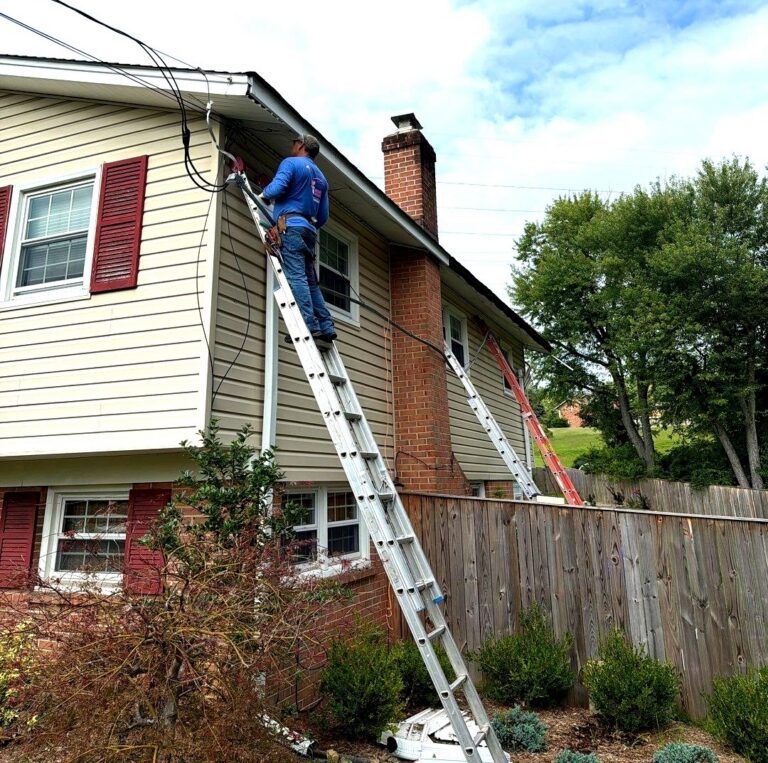
The crew arrives early, usually around 7-9 am. Before anyone starts with the tear-off, they will cover your landscaping, AC unit, and anything near the walls with tarps. They also set plywood or boards against the house if needed to protect siding and windows from falling debris.
Then the tear-off starts. Old shingles, underlayment, and worn flashing come off, section by section, down to the bare wood deck. This is the loudest part of the job. You will hear scraping and hammering overhead for several hours, and pictures may rattle on interior walls. If you work from home or have a nervous pet, this is the morning to be somewhere else.
Crews typically strip only as much roof as they can dry in the same day. Your home is never left open to the weather overnight.
What happens if the crew finds rotted decking?
This is the part of a roof replacement no one can fully predict. The decking under your shingles is hidden until tear-off, and years of small leaks can leave soft or rotted spots. In older homes that have suffered from active leaks or neglected ongoing maintenance, it is common to find a few sheets that need replacing.
New shingles nailed into rotted wood will not hold, so damaged sheets get cut out and replaced before anything else goes down. Your contract outlines a per-sheet price for decking replacement, so you know the cost before work starts, and your Project Manager will communicate any plywood needs to you during the project.
If a contractor quotes a roof with no mention of decking at all, ask about it. It is one of the most common sources of surprise charges in this industry.
What goes under the shingles, and why does it matter here?
The layers under your shingles do most of the waterproofing. First comes ice and water shield, a self-sealing membrane installed along the eaves, in valleys, and around chimneys and skylights. In the Mid-Atlantic, freeze-thaw cycles cause ice dams that push water up under shingles at the roof edge. This membrane is what stops that water from reaching your ceiling.
Next, a synthetic underlayment covers the rest of the deck. It sheds any water that gets past the shingles and protects the deck if a shingle lifts in a storm. New drip edge metal goes along the edges so water runs into your gutters instead of behind your fascia boards.
How are the shingles, flashing, and vents installed?
Shingles go on from the bottom edge up, each row overlapping the one below. Nailing pattern matters more than most homeowners realize: manufacturers specify exactly where and how many nails each shingle needs, and getting it wrong can void your warranty. As an Owens Corning Platinum Preferred contractor, American Custom Contractors installs to those manufacturer specifications, which is what makes extended manufacturer warranties available.
Around chimneys, walls, and skylights, the crew installs new flashing. These metal pieces direct water away from the joints where most roof leaks start. Finally, ridge vents and ridge cap shingles go along the peak, letting hot, humid air escape your attic. Proper ventilation helps your shingles last longer in our humid summers.
What does cleanup and final inspection look like?
Once the last shingle is down, the crew removes the tarps and protective boards and loads the debris into the dumpster. They run a magnetic sweeper across your driveway, lawn, and flower beds to pick up stray nails.
A final quality inspection follows, checking flashing, vents, shingle seal, and gutters. You can see what that inspection covers in what we check during our final roof quality inspection.
How long will the whole thing take?
A standard single-family roof usually takes one to two days. A few things can stretch that timeline:
- Steep or complex roofs with many valleys, dormers, or skylights
- Large amounts of rotted decking
- Multiple old shingle layers to remove
- Weather delays, which are common in spring and late fall
Your project manager should give you a realistic estimate for your specific roof before work begins.
What should you do while the roof is being replaced?
A little preparation goes a long way:
- Move cars out of the garage and driveway the night before.
- Take fragile items off walls and shelves, especially upstairs.
- Cover belongings in your attic, since dust and small debris can fall through.
- Keep children and pets away from the work area.
- Let your neighbors know, especially if you share a driveway.
You do not need to be home the whole time, but you should be reachable by phone in case a decision comes up.
Ready to see what your roof needs?
Before you plan a replacement, you should know whether you need one at all. A free inspection tells you the condition of your shingles, flashing, and ventilation, and whether a repair would do the job for now.
or call our Rockville office to talk to someone who has done this thousands of times since 1972.

FAQ: Before, During & After Your New Roof
Do I need to be home during the roof replacement?
No, you don’t need to be home the whole time. Just make sure you can be reached by phone in case a decision comes up. Move your cars out of the garage and driveway the night before, and take fragile items off walls and shelves, especially upstairs.
How loud is a roof replacement?
Tear-off is the loudest part. Expect several hours of scraping and hammering overhead, and pictures may rattle on interior walls. If you work from home or have a nervous pet, plan to be somewhere else that morning.
Will my home be left open to the weather overnight?
No. Crews strip only as much roof as they can dry in the same day, so your home is never left open overnight.
What happens if the crew finds rotted decking?
Damaged sheets are cut out and replaced before anything else goes down, since new shingles won’t hold in rotted wood. At American Custom Contractors, your contract lists a per-sheet price for decking replacement before work starts, and your Project Manager will keep you updated if any plywood needs replacing, so there are no surprise charges.