After a bad storm rolls through Maryland, Virginia, West Virginia, or Pennsylvania, it’s natural to wonder if your roof took a hit — especially once you see a neighbor’s crew show up with a dumpster. But wanting a new roof and having a legitimate wind or hail storm damage claim are two different things. This post walks you through how storm damage is actually determined, what a HAAG-trained eye looks for that yours can’t catch from the driveway, and — just as importantly — when the honest answer is “you don’t have a claim.”
Not Sure Either Way? Find Out for Free
Why You Can't Tell From the Ground — Even If You Try
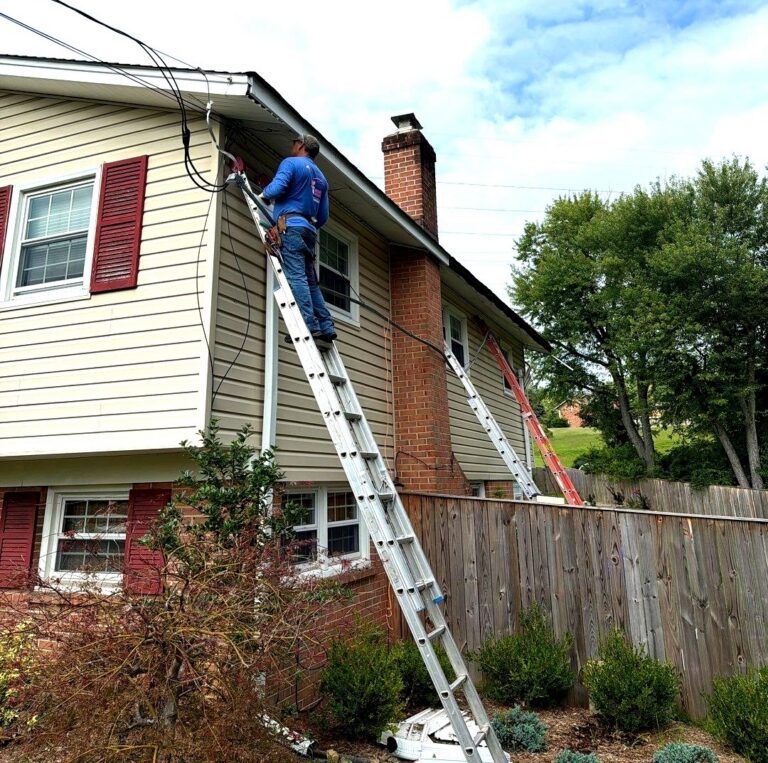
This is the honest part most contractors skip: storm damage is genuinely hard to see from a ladder, a window, or a walk around your yard. Hail bruises and wind-lifted shingle tabs often look like nothing more than normal shingle texture from 15–20 feet below.
Meanwhile, some roofs that look rough from the ground — streaked, faded, patchy — have zero storm-related damage at all. They’re just old. The reverse happens constantly too: a roof that looks perfectly fine from the curb can have dozens of hail hits once you’re standing on it running your hand across the mat.
What a HAAG-Certified Inspection Actually Checks For
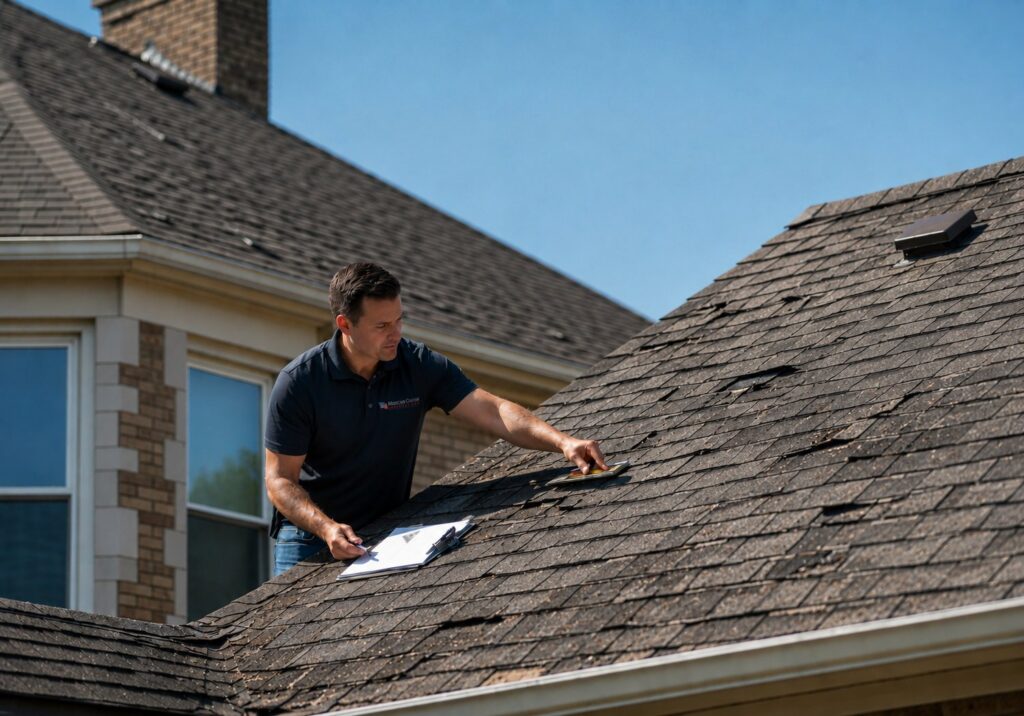
American Custom Contractors follows HAAG Engineering’s inspection standards, and our team is trained to their methodology for identifying storm damage. That means we don’t just glance at the roof from the ladder — we get up close on the roof, walk it, and inspect up close. A proper inspection includes a real examination of the shingles across multiple roof planes, a check for consistent impact patterns (real hail damage clusters in a directional pattern; random dings usually don’t), granule loss assessment, and a look at soft metals — gutters, flashing, vent caps — which bruise more visibly than shingles and often confirm whether a storm was strong enough to cause real damage in the first place.
Real Damage vs. Normal Wear — Side-by-Side Examples
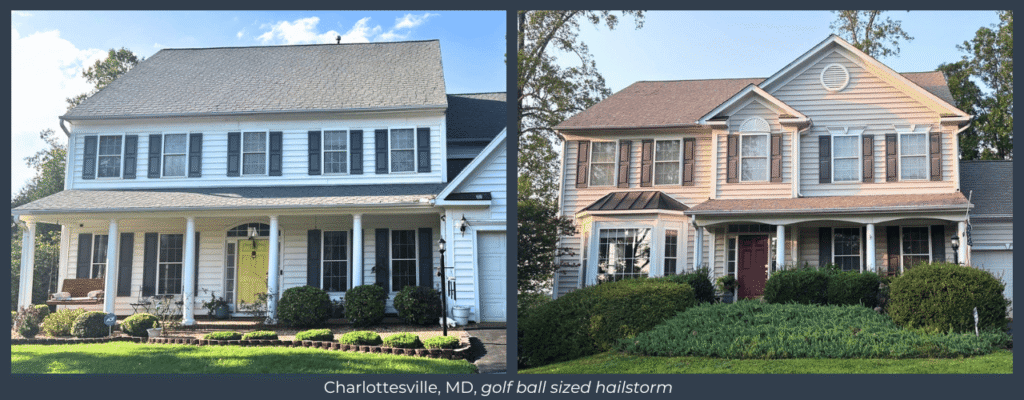
Here’s where transparency matters most. Not every mark on a roof is storm damage, and not every “clean-looking” roof is actually fine. Below are real examples from our inspections — homes where the roof had genuine, insurance-qualifying wind or hail damage, and homes where it didn’t, even though the homeowner suspected otherwise.
We Won't Tell You to File Unless It's Warranted — But Your Insurer May Still Push Back
Let’s be direct: we won’t tell you to file a claim if our inspection doesn’t turn up damage that’s likely to hold up. Filing a claim doesn’t cost you anything by itself, and Maryland, Virginia, and DC law don’t allow insurers to raise your rate simply for filing — but going through the process for something that isn’t really there wastes your time.
The other side of this is just as important to say honestly: having a legitimate claim doesn’t guarantee your insurer will treat it that way. In a May 2025 Senate subcommittee hearing chaired by Sen. Josh Hawley, adjusters and homeowners testified under oath that companies including Allstate pressured staff to lower damage estimates and delete or alter findings that would have supported a payout. Watch the hearing That’s not a reason to distrust every carrier — but it’s exactly why documentation matters. If our inspection turns up real damage, we build a report thorough enough to stand up to an adjuster who’s looking for reasons to minimize it.
How We Determine Eligibility, Step by Step
- Free inspection — a HAAG-trained team member walks your full roof, not just the side facing the street.
- Up-close shingle inspection and pattern check — confirming whether marks are storm-related or age-related.
- Soft metal and accessory check — gutters, flashing, and vents often confirm storm severity even when shingles look ambiguous.
- Honest conversation — we tell you what we found, whether that supports a claim or not.
- Documentation, if you have a case — photos, measurements, and a report written to match what your adjuster will need to see.
- You decide — whether to file, repair out of pocket, or do nothing yet.
What Storm Damage Claims Are Typically Covered
Most homeowner policies in the DC Metro area cover roof damage from wind, hail, and falling debris — but coverage depends on your specific policy, your deductible, and your roof’s age and condition at the time of the storm. We can’t tell you what your policy covers — that’s between you and your carrier — but we can tell you honestly whether what’s on your roof matches what insurers typically recognize as storm damage.
Get a Straight Answer About Your Roof
HAAG-trained inspection. Honest answer either way. No pressure to file if there’s nothing to file for.